I was recent called out to what sounded like a fairly straightforward problem.
The customer had two panel heaters that had stopped working, along with an immersion heater that was no longer working either.
At first glance, it could have been three separate appliance faults. But when several electrical items stop working around the same time, it is always worth looking beyond the appliances themselves.
After carrying out some investigation, I found the actual problem — and it was considerably more serious.
The problem wasn't the heaters
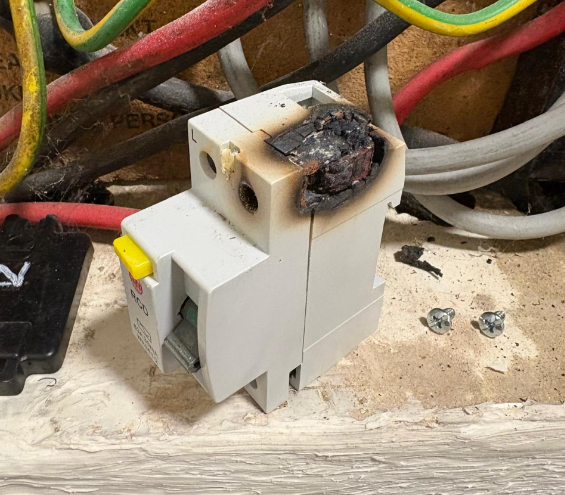
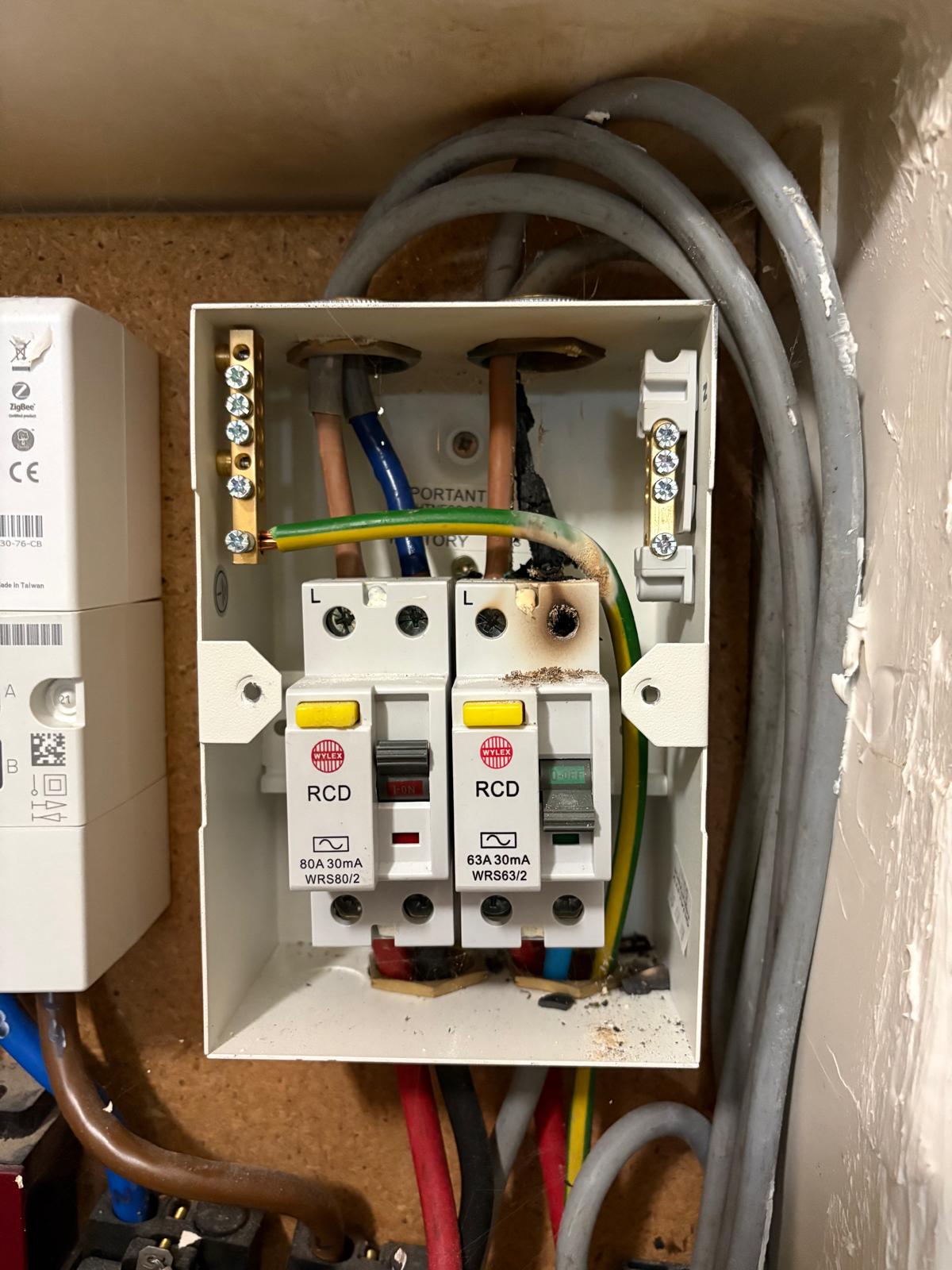
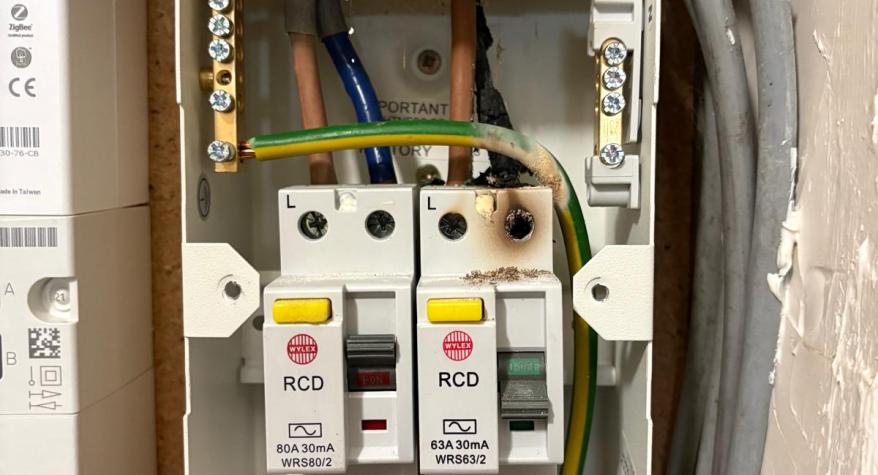
The electrical fault was at the RCD main switch in the meter box.
The neutral connection had become badly overheated and had burnt out, eventually resulting in the neutral becoming disconnected.
This explained why the three items had stopped working.
What was particularly interesting, however, was that the customer had experienced intermittent problems for several weeks beforehand.
That is an important warning sign.
The electrical installation hadn't simply gone from working perfectly to completely failed overnight. There had been symptoms beforehand that something wasn't quite right.
So what causes a neutral connection to burn out?
A connection that isn't making a good electrical contact can create a high resistance at the connection.
Even though the circuit may initially continue to operate, a poor connection can generate heat when current flows through it.
As the connection gets hotter, the problem can become progressively worse. The connection can deteriorate further, creating even more resistance and heat.
Eventually, the connection can become badly damaged enough to fail completely.
That's effectively what had happened here.
The result was a burnt-out neutral connection and a loss of power to the affected circuits.
The warning signs can be easy to dismiss
This is the part of the job that really stood out to me.
The customer had noticed intermittent problems weeks before the eventual failure.
When an electrical circuit occasionally stops working and then starts working again, it can be tempting to think It's probably just the appliance or It hasn't done it again for a while so it must have sorted itself out.
Unfortunately, electrical faults don't always work that way.
Intermittent electrical problems can sometimes be an early indication of a loose, damaged or overheating connection.
Depending on where the problem is, warning signs can include:
- Appliances or heating occasionally switching off unexpectedly
- Lights flickering or dimming without an obvious reason
- Several items losing power at the same time
- Power returning after a short period
- Unusual buzzing or crackling from electrical equipment
- A burning or overheated plastic smell around electrical equipment
- Discolouration or scorching around a consumer unit, switch or connection
- An RCD, circuit breaker or other protective device behaving unexpectedly
Not every one of these symptoms means there is a dangerous connection — but they shouldn't simply be ignored.
Why intermittent faults need investigating
An electrical fault that comes and goes can actually be more concerning than one that fails completely.
If something has failed completely, the fault is usually obvious: the circuit isn't working and an electrician can investigate it.
An intermittent fault can remain hidden while the electrical equipment continues to operate.
Meanwhile, if the underlying problem is a poor connection, it may continue to deteriorate.
In this particular case, the customer's intermittent problems were effectively an early warning that something wasn't right.
By the time I attended, the problem had progressed to the point where the neutral connection had overheated and burnt out.
Don't keep resetting or switching things back on
If you experience an electrical problem that repeatedly comes and goes, it's better to have it investigated rather than repeatedly resetting a breaker or simply waiting for the problem to disappear.
And if you notice burning smells, buzzing, crackling, visible scorching or excessive heat around electrical equipment, don't ignore it.
Switch off the affected equipment if it is safe to do so and get the installation checked by a suitably qualified electrician.
One small symptom can point to a much bigger problem
This job was a good example of why diagnosing electrical faults properly matters.
The customer called because two panel heaters and an immersion heater weren't working.
The real fault wasn't inside any of those appliances.
It was a damaged neutral connection in the meter box.
The intermittent problems experienced in the preceding weeks were the clue that something had been developing for some time.
Electrical faults don't always announce themselves with smoke and sparks.
Sometimes the first warning is simply that it keeps going off but then starts working again.
That's not something I'd recommend ignoring.
If you have an electrical problem that is intermittent, unusual or affecting several items at once, it's worth getting it checked before a small fault becomes a much bigger one.
Plugs Electrical
NICEIC Approved Contractor
Serving High Wycombe, Great Missenden, Stokenchurch, Wendover and surrounding areas.
If you're experiencing an intermittent electrical fault in your home, get in touch and I can investigate the cause rather than simply treating the symptom.