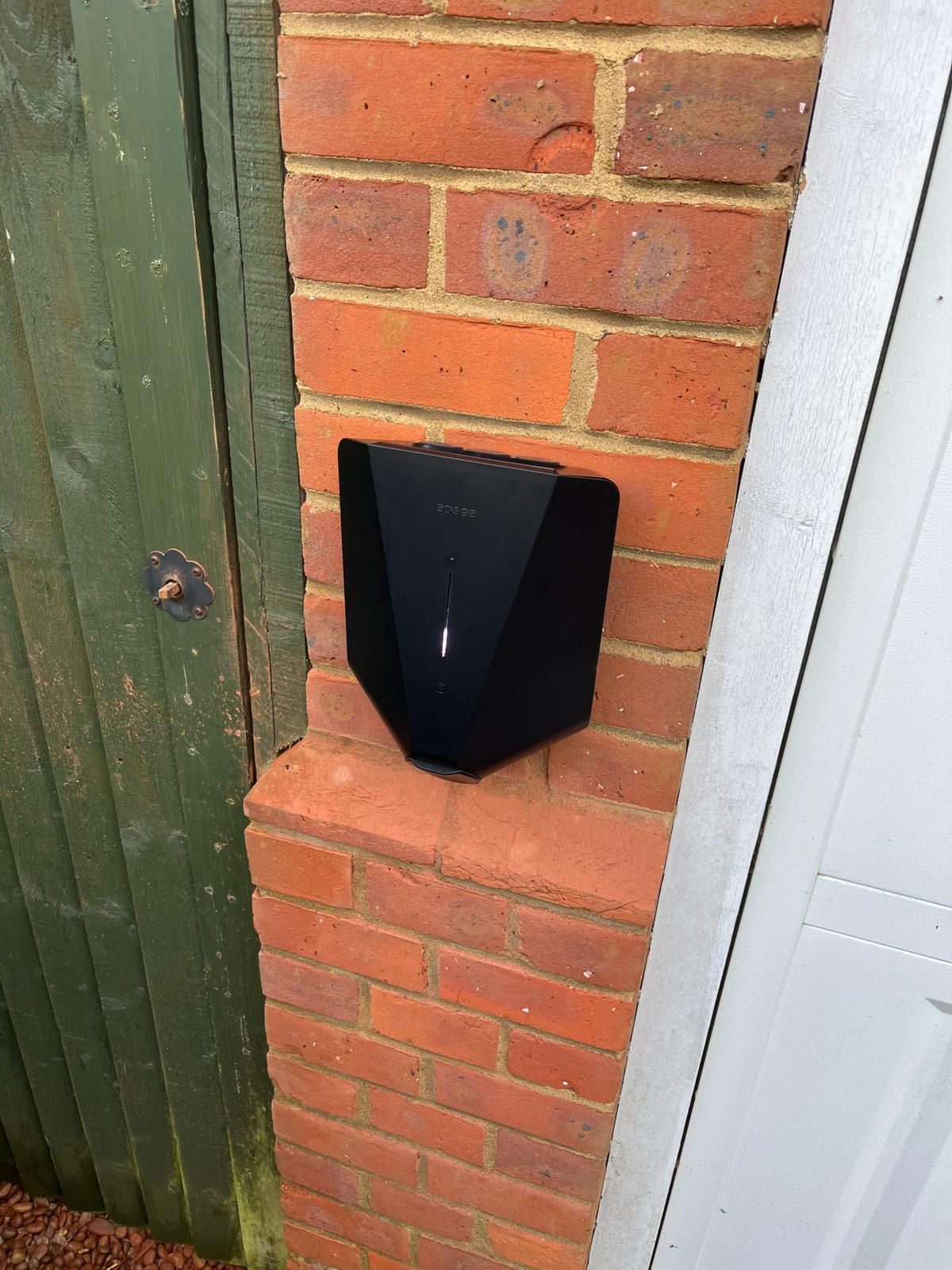
Electric vehicles are becoming increasingly popular, and for many High Wycombe homeowners, installing a charger at home is one of the first things to consider when making the switch.
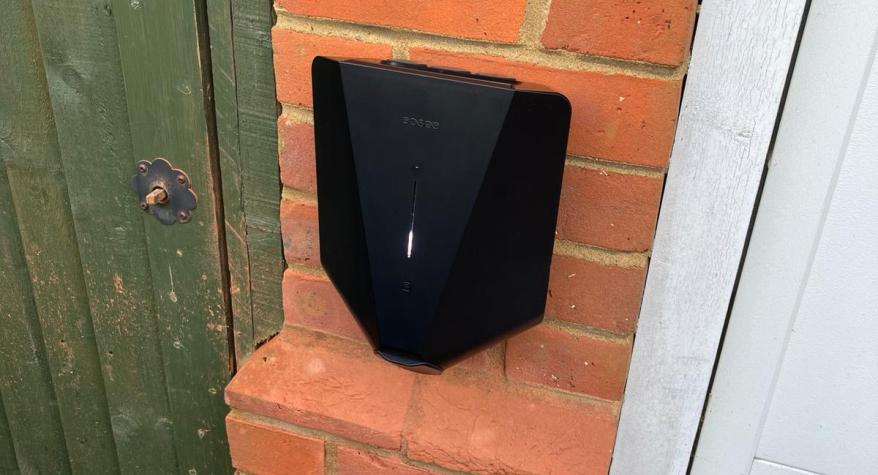
Thinking About Installing an EV Charger? Why the Electrical Installation Matters
Having a charger on your driveway is incredibly convenient — you can simply plug your vehicle in when you get home and wake up with a full or partially charged battery.
But there's more to installing an EV charger than simply fixing a charger to the wall and running a cable back to the consumer unit.
A properly installed EV charging point needs to be designed around the existing electrical installation, with several important safety considerations taken into account.
Can your existing electrical installation handle an EV charger?
An EV charger can place a significant electrical load on a property for several hours at a time.
Depending on the charger, you're potentially adding a continuous load of several kilowatts to your High Wycombe home's electrical installation.
Before installing one, an electrician should assess the existing installation and consider:
- The property's incoming electrical supply
- The existing consumer unit and its available capacity
- The maximum demand of the property
- The proposed charger rating
- Cable size and voltage drop
- Earthing and bonding arrangements
- The proposed cable route
- Appropriate RCD protection
- PME fault protection
- Surge protection
- Whether load management would be beneficial or necessary
This is why choosing the charger should not necessarily be the first step.
The electrical installation should be assessed before deciding how and where the charger should be installed.
EV chargers need appropriate RCD protection
Electric vehicle charging equipment requires additional protection against electric shock.
The exact arrangement depends on the charger and its built-in protective features, but the installation needs to provide appropriate protection against both AC and, where applicable, DC residual currents.
For example, a suitable Type A RCD may form part of the protective arrangement where the charger incorporates appropriate DC residual current detection.
This is an important distinction because EV charging isn't necessarily the same as installing an ordinary socket outlet.
The protective devices need to be suitable for the particular charging equipment being installed.
Why PME fault protection matters
This is one of the areas that can easily be overlooked by someone unfamiliar with EV charger installations.
Many UK homes have a TN-C-S (PME) earthing system.
Under certain fault conditions, such as a broken PEN conductor, the voltage on exposed-conductive-parts connected to the PME system can rise to a dangerous level.
Because an EV charger is installed outside and is connected to a vehicle that people can be touching while standing on the ground, this needs particular consideration.
Where required, the installation needs an appropriate method of protecting against the risks associated with a PME supply.
Depending on the circumstances, this could involve the use of a charger with suitable protective functionality, an open-PEN protective device, or another compliant arrangement.
It's therefore important that your electrician establishes what type of earthing system your property has and designs the installation accordingly.
Should an EV charger have its own RCD?
An EV charger should have an appropriately designed dedicated circuit and suitable protective devices.
It shouldn't simply be treated as another appliance connected to an existing general-purpose circuit.
Having the charger correctly separated from other circuits also has practical advantages.
For example, if a fault occurs with the EV charging equipment, you don't want an unnecessarily large part of the house losing power because the charger and multiple other circuits are sharing the same protective device.
The exact arrangement will depend on the existing consumer unit, the charger and the overall installation design.
What about surge protection?
Modern EV chargers contain electronic components, and like other sensitive electrical equipment, they can be affected by transient overvoltages.
Surge Protective Devices (SPDs) can provide protection against certain transient overvoltage events.
The requirement for surge protection should be assessed as part of the overall electrical installation rather than simply assuming that an SPD is or isn't required because an EV charger is being installed.
If the property already has appropriate surge protection, this should also be considered as part of the design.
Cable size isn't just about the charger's current
A common mistake is to look at the charger's maximum current and select a cable that can carry that current.
That's only part of the calculation.
The cable needs to be suitable for the installation method, ambient conditions, grouping and other relevant factors.
Voltage drop also needs to be considered, particularly where the charger is a long distance from the consumer unit.
For example, a charger installed at the far end of a long driveway could require considerably more consideration than one installed directly outside the consumer unit.
The cable route also needs appropriate mechanical protection where necessary.
What about load management?
Imagine you have an EV charger capable of drawing 7.4 kW.
At the same time, you might have the oven, electric shower, kettle, washing machine, tumble dryer and other appliances operating.
Your home's electrical supply has a finite capacity.
This is where load management can be extremely useful.
A suitable load-management system can monitor the property's electrical demand and adjust the EV charger's charging load accordingly.
Rather than unnecessarily upgrading the entire electrical installation or risking excessive demand, the charger can reduce or pause its charging load when other household demand is high.
It's particularly worth considering where the existing supply is relatively limited or the property has a high electrical demand.
Don't just compare EV charger installation prices
When you're getting quotes for an EV charger, it's tempting to compare the prices and choose the cheapest installation.
But make sure you're comparing like for like.
Ask what is actually included.
A properly designed EV charger installation may involve:
- Assessment of the existing electrical installation
- Checking the earthing arrangement
- Assessment of the incoming supply
- Appropriate RCD protection
- PME fault protection where required
- Surge protection considerations
- Correct cable sizing
- Voltage-drop calculations
- Appropriate circuit protection
- Load-management considerations
- Suitable cable routing and mechanical protection
- Inspection and testing
- Certification following installation
The charger itself may be the most visible part of the installation, but the protection and design behind it are just as important.
A properly installed EV charger should give you confidence
An EV charger is a significant addition to your home's electrical installation.
It's something you're likely to use regularly for many years, so it's worth making sure it's installed correctly from the beginning.
A professional electrician should assess your individual property rather than simply installing the same arrangement at every house.
At Plugs Electrical, we can assess your existing electrical installation and discuss your requirements before recommending an appropriate EV charging solution.
If you're considering installing an EV charger at your home in High Wycombe, Beaconsfield, Great Missenden, Stokenchurch, Wendover or the surrounding areas, get in touch for advice and a quotation.
Don't just install an EV charger. Make sure the electrical installation behind it is designed properly too.